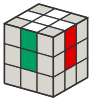
Hold the cube white center up — for this step only. The goal: four white edges around the white center, each edge’s second color sitting directly above its matching center. A white plus with wrong side colors is not a cross — check the sides, not just the top.
The direct method
One edge at a time:
- Find a white edge, anywhere on the cube.
- Read its other color. That color names its home — the white-red edge belongs above the red center, nowhere else.
- Bring it under that center, in the bottom layer with white facing down. Turn the bottom layer until the edge sits directly below its matching center.
- Turn that face twice. The edge travels straight up into the cross, white on top, color matching the center.
If an edge arrives at the top with white facing sideways instead of up, it’s flipped: one turn drops it back out, and you re-approach it through the bottom layer as above.
Why there’s no algorithm
Nothing else is solved yet, so every turn is free — you cannot break what does not exist. The only constraint grows as you work: don’t knock out edges you’ve already placed, and if a move would, turn the blocker out of the way first, insert, then restore it.
Repeat until all four edges are in. Done means: white cross on top, and each side face shows its edge sticker matching the center below it.
Flip it
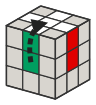
Turn the whole cube upside down: x2. White is now on the bottom, yellow
on top — and stays that way for the rest of the solve. Every later
step assumes this grip: you work in the top layer, where you can see
pieces coming, and drop them down into place.